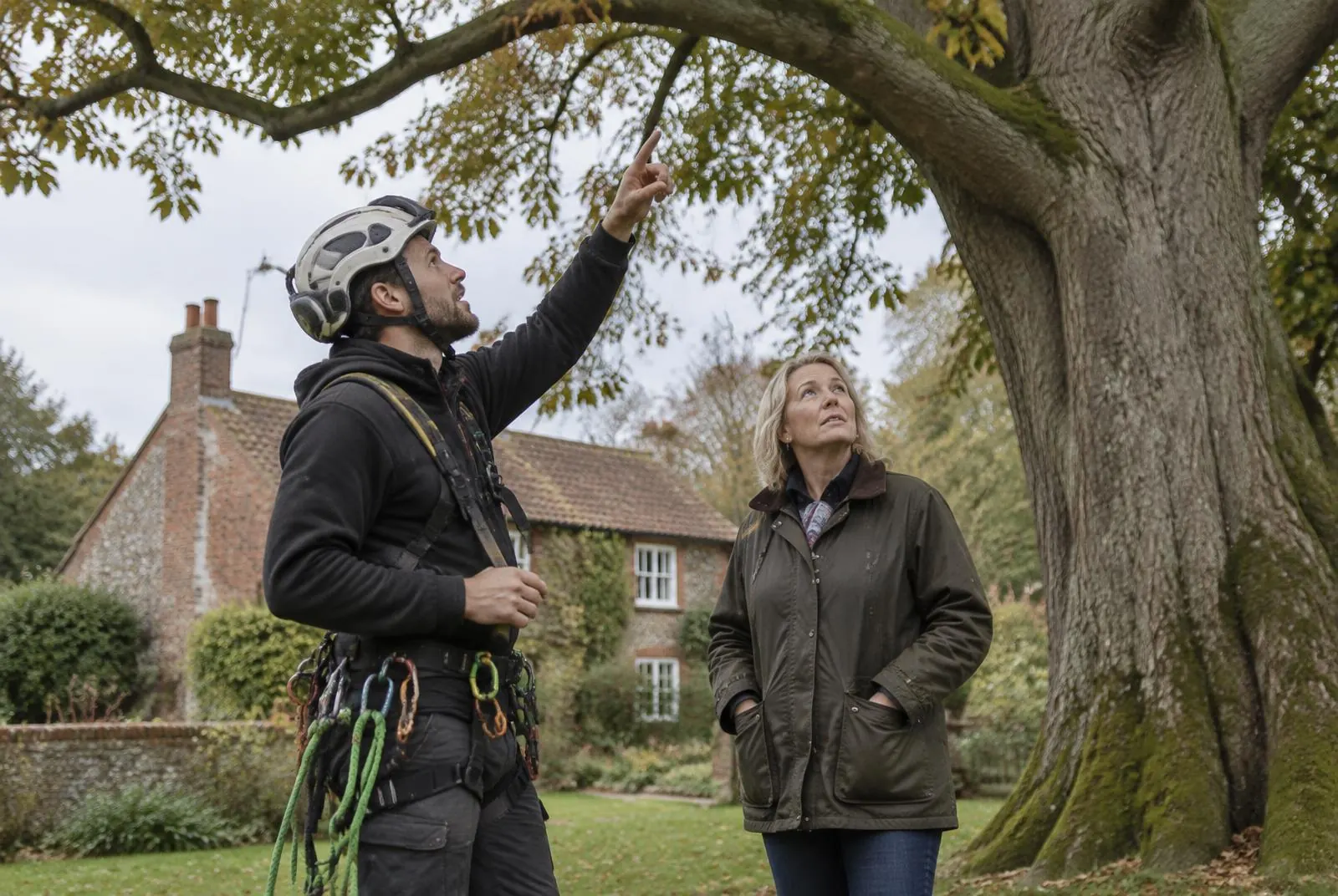
‘Can you cut it back a bit?’ is one of the most common things we hear. The right answer depends on what you want to achieve, and on the tree. Here are the three operations we use most.
Crown thinning
Thinning removes selected smaller branches from inside the crown without changing its outline. It lets more light through, reduces wind resistance and can lessen the risk of the tree being damaged in strong winds, while the tree still looks the same size.
Crown reduction
Reduction makes the crown smaller in height and/or spread. Done properly, each branch is cut back evenly to a suitable growth point so the tree keeps its natural shape and regenerates over time. It reduces mechanical stress on the tree and the effects of shading and light loss.
Crown lifting
Lifting removes lower branches to raise the base of the crown. It's ideal for clearance over drives, paths and lawns, for letting light into a garden, or for opening up a view.
What we don't recommend
Topping (cutting a tree's main stems back to stumps) usually leads to weak, fast regrowth and decay. Good practice for tree work in the UK is set out in BS 3998:2010, Tree work – Recommendations, and we'll always suggest the approach that's best for the tree's long-term health.