Trees are remarkably good at living with damage, and not every blemish is a problem. But some signs are worth taking seriously, particularly when a tree is close to a house, road, path or play area.
Warning signs to look for
- Fungi: mushrooms or bracket fungi growing on the trunk, at the base or on the roots can indicate decay inside.
- Crown dieback: dead twigs and branches at the top or edges of the crown, or thin, sparse foliage compared with previous years.
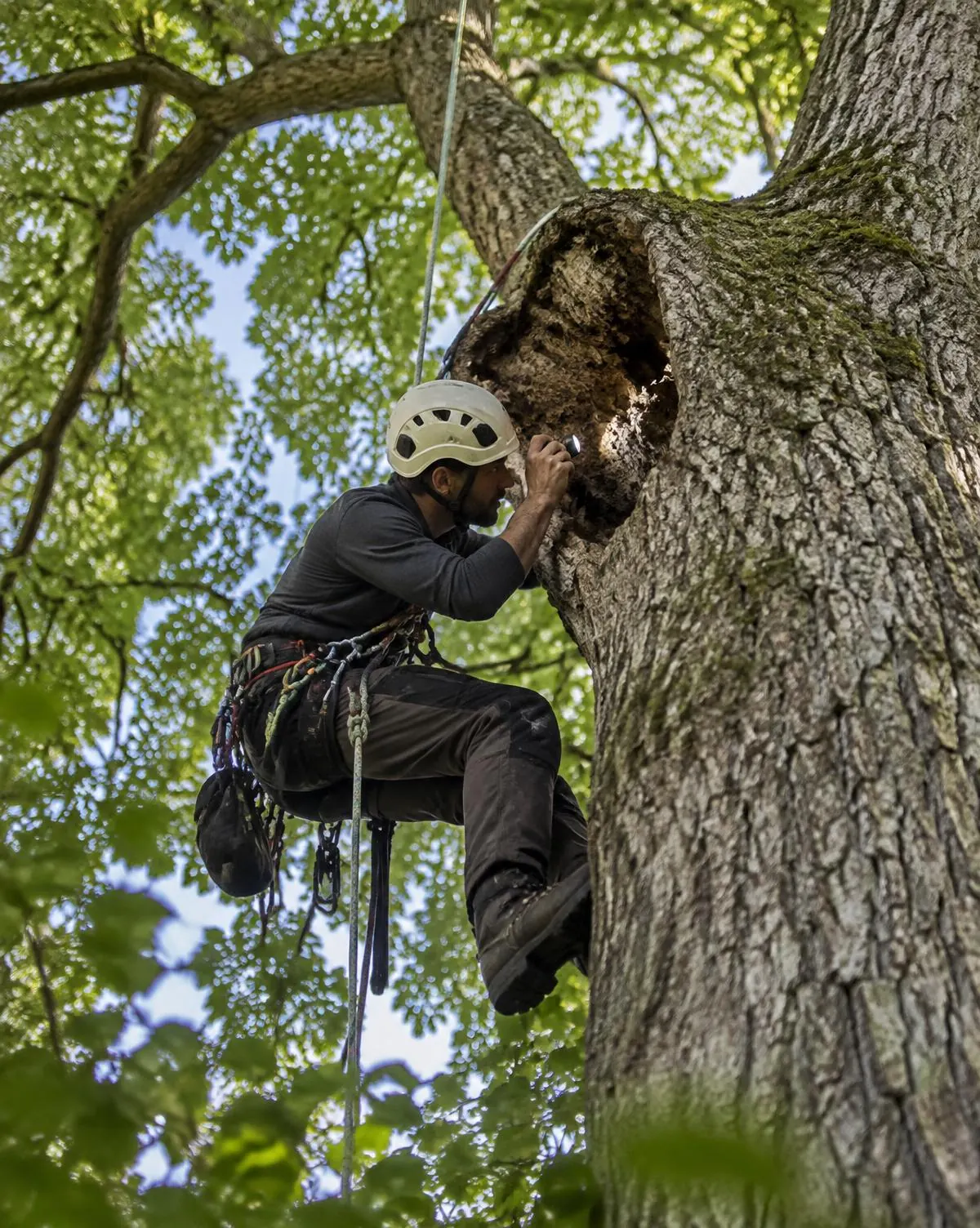
- Cracks, splits or cavities in the trunk or at the point where large limbs join.
- Bark that is falling away, oozing or discoloured.
- A new or worsening lean, or soil heaving and cracking around the base.
- Large dead branches hanging in the crown.
- Leaves that wilt, discolour or drop much earlier than they should.
Ash dieback
Ash dieback is a fungal disease that has spread across the UK, and Norfolk has many ash trees. Typical signs include blackened, wilting leaves, dark diamond-shaped lesions where twigs meet the stem, and progressive dieback of the crown. Badly affected trees can become brittle, so an inspection is sensible if an ash is near people or property.
When to call an arborist
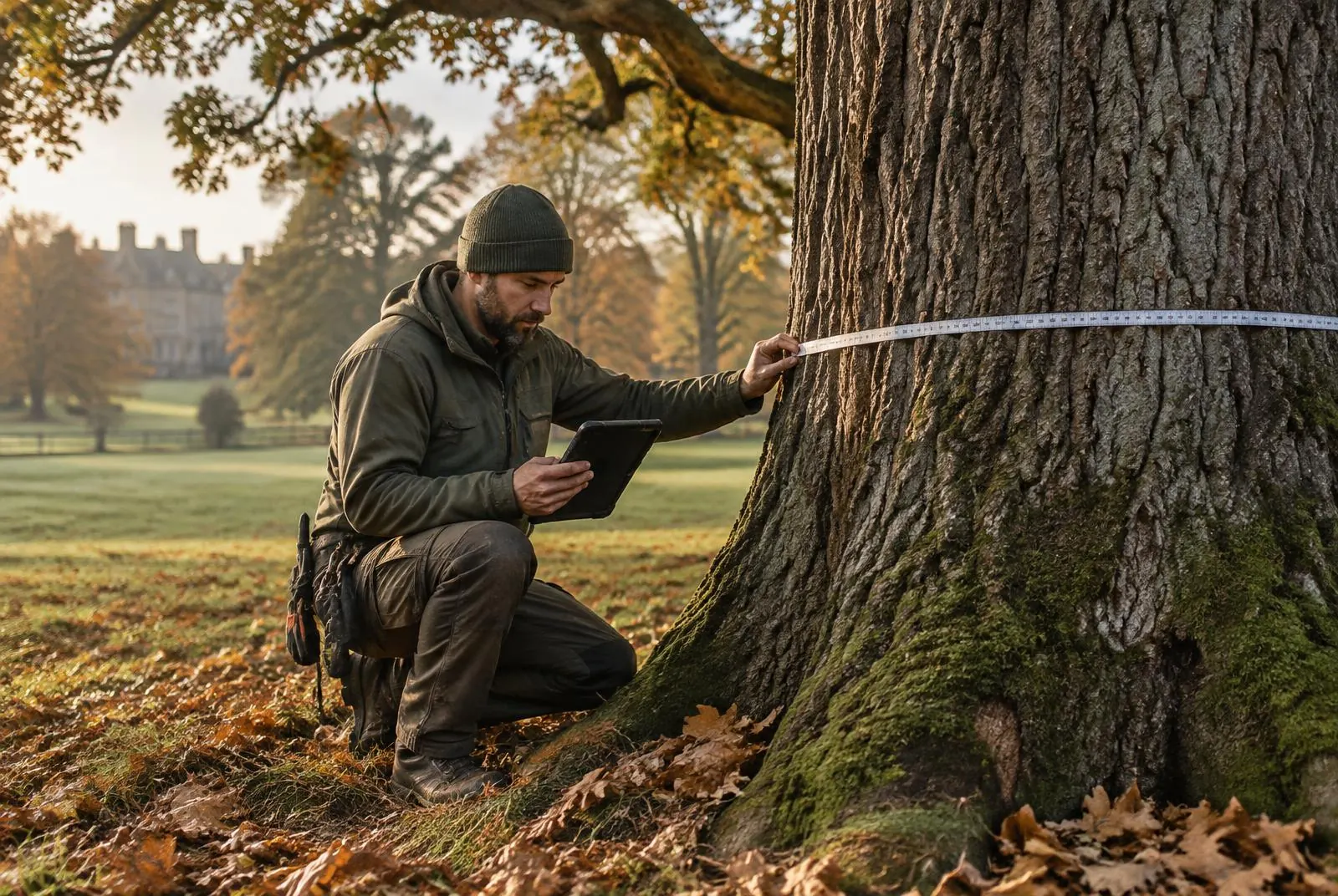
If you notice any of these signs on a tree that could reach a building, road, footpath or garden that people use, it's worth having it looked at. Many problems can be managed with targeted pruning rather than removal, and fungal species identification can tell us a great deal about what's happening inside the tree.
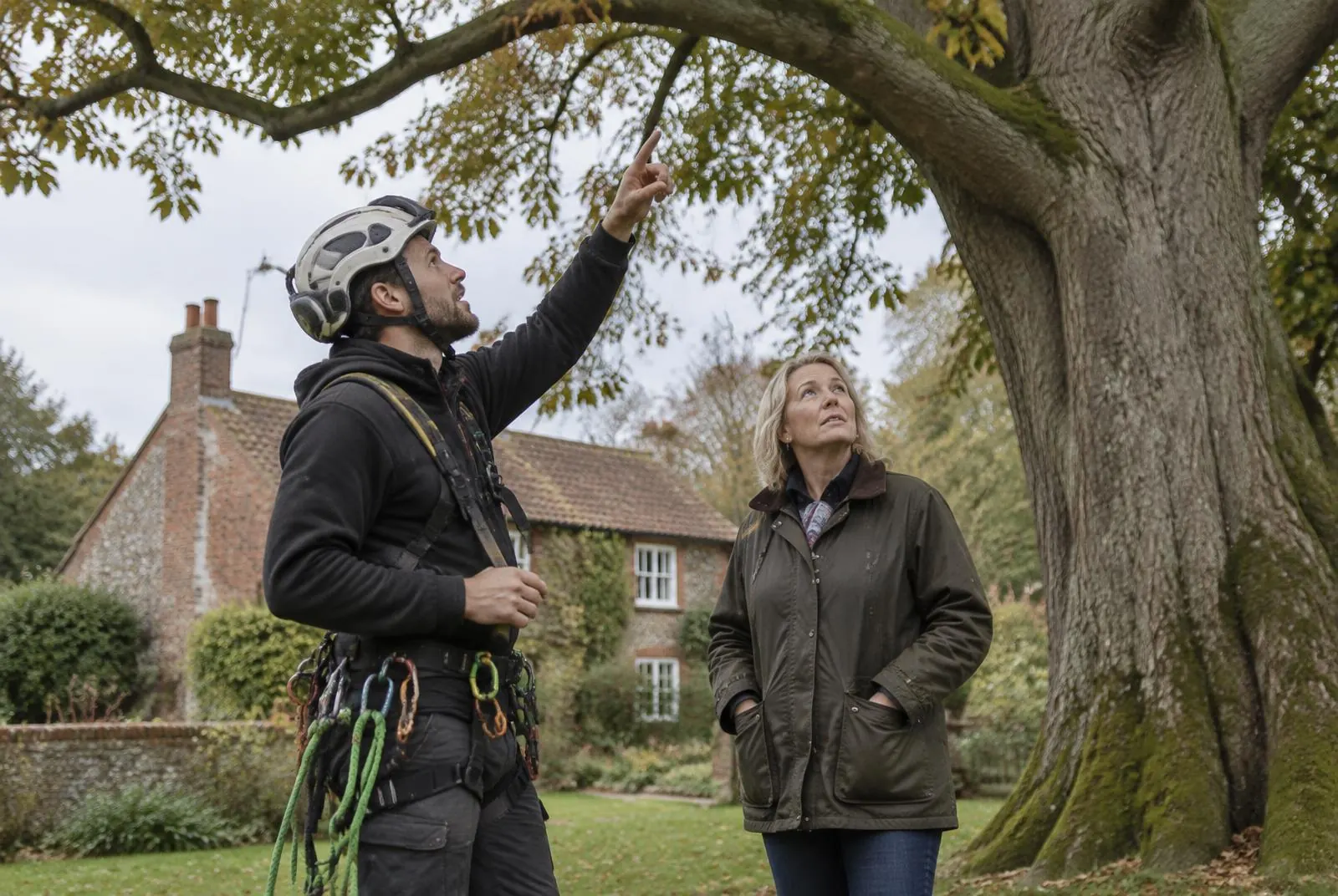
Where we can't see enough from the ground, a climbing inspection lets us examine defects up close and recommend whether the tree can be retained, needs remedial work, or needs further investigation.